
A Bra, the Hollywood Sign, and a Cultural Moment
The campaign that placed Sydney Sweenet at the centre of public debate did not emerge in a vacuum. In late January 2026, Sweeney became the focus of media attention after reportedly climbing the Hollywood sign and hanging bras without official authorisation. The stunt quickly escalated from a publicity moment into a legal and cultural controversy, raising questions about permission, symbolism, and intent.
According to reporting, Sweeney did not have approval from the Hollywood Chamber of Commerce to carry out the action, prompting legal scrutiny and sharp public reactions. What might otherwise have been dismissed as a provocative marketing move instead became a widely discussed incident, amplified by its setting, timing, and the symbolic weight of the Hollywood sign itself.
Crucially, the backlash was not driven solely by concerns over legality or public safety. The reaction revealed deeper tensions around gender, sexuality, and cultural norms in contemporary America. The stunt was interpreted by different audiences in radically different ways: as playful provocation, irresponsible behaviour, commercial opportunism, or ideological signalling. These competing readings transformed a lingerie promotion into a broader cultural flashpoint.
This context is essential to understanding why the campaign resonated so strongly. The bras were not just products displayed in an unusual location; they became symbols embedded in an ongoing conversation about femininity, visibility, and cultural permission. The controversy did not distract from the campaign’s message—it intensified it, ensuring that the question was no longer what was being sold, but what it represented.
At surface level, the answer appears simple Sydney Sweenet sells bras. The campaign visuals are explicit in their intent: lingerie, sex appeal, and a well-known celebrity body used to draw attention to a commercial product. This is the most immediate and visible layer of the message. It is what the audience sees first and what the brand is formally offering. In traditional marketing terms, this is a familiar and effective formula: a desirable product, amplified by fame, presented through attractive imagery

However, stopping at this level misses why the campaign has generated such a strong cultural reaction. If this were only about bras or lingerie, it would not have provoked debate, discomfort, or enthusiasm beyond the usual commercial noise. The intensity of the response indicates that the product itself is not the core issue. The product is merely the entry point.
At a second level, the campaign operates as a statement about brand meaning—specifically, about femininity. What is being sold here is not empowerment as a slogan, nor femininity framed through irony or explanation. Instead, the campaign presents physical attractiveness as something straightforward and unproblematic. Desire exists, and it does not require justification. Confidence is shown, not explained. This absence of moral framing is deliberate. In a cultural context where images of women are often required to carry an explicit narrative—why this representation is acceptable, what it stands for, what values it supports—this campaign refuses to participate in that discourse. That refusal is not neutral; it is a positioning choice.
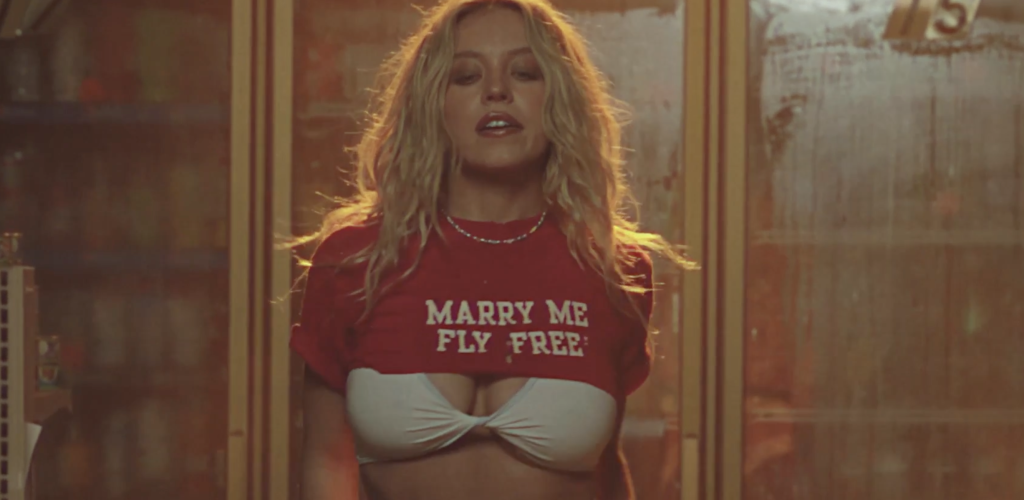
Moving to a third level, the campaign takes on cultural meaning. At this scale, it is no longer about an individual woman or a single product, but about an aesthetic worldview. The imagery feels familiar and traditional rather than disruptive or progressive. It aligns with conventional gender norms and avoids visual or narrative experimentation. Consumption is presented as pleasure, not as a moral act. The brand does not ask the audience to think about ethics, identity, or ideology. Instead, it offers something that resembles a “classic America” visual language—recognisable, mainstream, and emotionally legible to a broad audience. Here, the bra becomes a symbol rather than a garment, representing comfort with established norms in a moment when those norms are frequently questioned.
At the deepest level lies the real insight of the campaign: it sells permission. Permission to like what you like without having to defend it. Permission to desire without explanation. Permission to enjoy beauty without translating that enjoyment into political or moral terms. In a culture where tastes and preferences are increasingly scrutinised, this form of permission is powerful. The campaign does not persuade the audience to adopt a new value system; it reassures them that the one they already hold is acceptable.
This is also why the campaign works now. Cultural polarisation has intensified, and consumption has become heavily moralised. Brands are often expected to signal virtue, take positions, or educate their audiences. For many consumers, this produces fatigue. In that context, a campaign that simply presents desire without commentary can feel like relief. It removes friction from consumption and restores a sense of ease.
That ease, however, comes with risk. Strategies built on cultural signalling inevitably divide audiences. This campaign strongly attracts some consumers while alienating others. Yet this is not a flaw—it is the consequence of clarity. As the well-known political marketing phrase reminds us, “Republicans buy sneakers, too.” Markets are rarely as ideologically pure as public debate suggests. People with very different beliefs still share habits, desires, and aesthetic preferences.
Ultimately, if this campaign is understood only as an attempt to sell bras, it remains superficial. What it truly sells is meaning: a way of feeling comfortable, unexamined, and at ease in one’s preferences. Strong campaigns do not just move products. They position audiences emotionally in the world. Sometimes, what they offer most effectively is the quiet permission to stop explaining oneself.

BONUS TRACK:
I’m not here to tell you to buy American Eagle jeans.
And I definitely won’t say they’re the most comfortable jeans I’ve ever worn.
Or that they make your butt look amazing.
Why would I need to do that?
But if you decide you want to buy the jeans, I’m not going to stop you.
Just so we’re clear, this is not me telling you to buy American Eagle jeans.
Sydney Sweeney. Hasburg jeans.
You see what I did there, right?